Secure in a complex legal framework
Cosmetic products and beauty medicine operate in a challenging regulatory environment: EU Cosmetics Regulation (EC) No. 1223/2009, Medical Device Regulation (MDR) 2017/745, Annex XVI, national regulations and competition law requirements are all intertwined. We support you in clearly understanding this framework, minimizing risks and bringing your products to market in a legally compliant manner.
The regulatory landscape has changed fundamentally as a result of the MDR: Products that were previously not considered medical devices are now subject to stricter requirements. At the same time, the EU Cosmetics Regulation places high demands on safety assessment, labeling and proof of claims. For manufacturers, distributors and brand owners, this means Without sound regulatory know-how and structured documentation, market entry and long-term compliance are virtually impossible to achieve.
Our services for cosmetic products
We support manufacturers, distributors and brands throughout the entire life cycle of their beauty products – from the initial idea to marketing in the EU and beyond. Our expertise covers all the critical steps required for a successful and legally compliant market launch.
Classification and delimitation
The correct legal classification of your product is the first crucial step. We clarify whether it is a cosmetic product, a medical device, a medicinal product or a borderline product. The distinction is made on the basis of the objective intended purpose and takes into account the composition, properties and application modalities. We also check the distinction from foodstuffs, particularly in the case of products for the oral cavity. An incorrect classification can have far-reaching consequences – from a lack of market approval to warnings under competition law and official sanctions. We ensure that your product is on the right regulatory footing right from the start.

Safety assessment & product information file (PIF)
At the heart of every cosmetics compliance is the Cosmetic Product Safety Report (CPSR) as part of the product information file. We prepare complete CPSRs for you in accordance with Annex I of Regulation (EC) No. 1223/2009, which include both Part A (safety information on composition, physico-chemical properties, stability, microbiological quality, impurities and exposure) and Part B (conclusions of the safety assessment with warnings and scientific justification).
Our qualified safety assessors carry out toxicological assessments of all ingredients, evaluate the systemic exposure dose (SED) and test toxicological endpoints such as skin sensitization and skin irritation. We pay particular attention to vulnerable groups such as children under the age of three and products for intimate use. In addition to the pure preparation, we also review existing CPSRs and PIFs, identify gaps and update documentation in the event of formulation or packaging changes. We pay attention to common sources of error such as incomplete raw material documentation, overlooked impurities or inadequate packaging assessments.
Labeling
& Claims
The labeling of cosmetic products is subject to precise requirements in accordance with Articles 19 and 20 of the EU Cosmetics Regulation. We check your labels for full compliance with all mandatory information: Name and address of the responsible person, country of origin, nominal content in metric measurements, best-before date or PAO symbol, batch or lot number, INCI declaration in the correct order as well as all necessary precautions and warnings. We pay particular attention to the correct declaration of fragrance allergens and other substances requiring labeling.
When it comes to efficacy statements and claims, we go beyond mere compliance: we assess whether your product claims are technically correct, not misleading and can be substantiated with suitable evidence. In doing so, we navigate between permissible care claims and impermissible disease-related claims. We ensure that your marketing messages can have the desired effect without exceeding regulatory limits or running competition law risks.

Registration
& communication with authorities
Registration in the Cosmetic Products Notification Portal (CPNP) is mandatory before placing on the market. We take care of the complete registration in the CPNP for you and, if required, the corresponding notification in the British SCPN portal. We coordinate all the necessary documents, prepare the required product information and ensure that all deadlines are met.
We also support you in communicating with the relevant authorities such as the Federal Office of Consumer Protection and Food Safety (BVL) or the state authorities. In the event of official inquiries, market surveillance measures or demarcation issues, we are at your side with our specialist knowledge and prepare all the necessary statements and evidence. Our experience shows that professional communication with the authorities can be decisive in avoiding complaints or resolving them constructively.
Contract &
Sales framework
The legal protection of your supply chain and distribution structure is just as important as product-related compliance. We advise you on contract manufacturing agreements in which responsibilities, quality standards and documentation obligations must be clearly regulated. We clarify the chains of responsibility between the manufacturer, distributor and responsible person and help you to preventively address liability issues.
We take competition law aspects into account when selling and advertising your products: From compliance with the Therapeutic Products Advertising Act to the correct presentation of product features and the avoidance of misleading advertising. We check your marketing materials, online presence and product descriptions for legal risks and develop strategies for effective but compliant communication.
For cosmetic and beauty products that fall under the MDR, we combine regulatory expertise with a deep understanding of the specific requirements of Annex XVI products. Since the MDR came into force on May 26, 2021, certain products without an intended medical purpose have been subject to the same strict requirements as classic medical devices – a challenge that many manufacturers are only now having to face in full.

Scope of application & risk classification
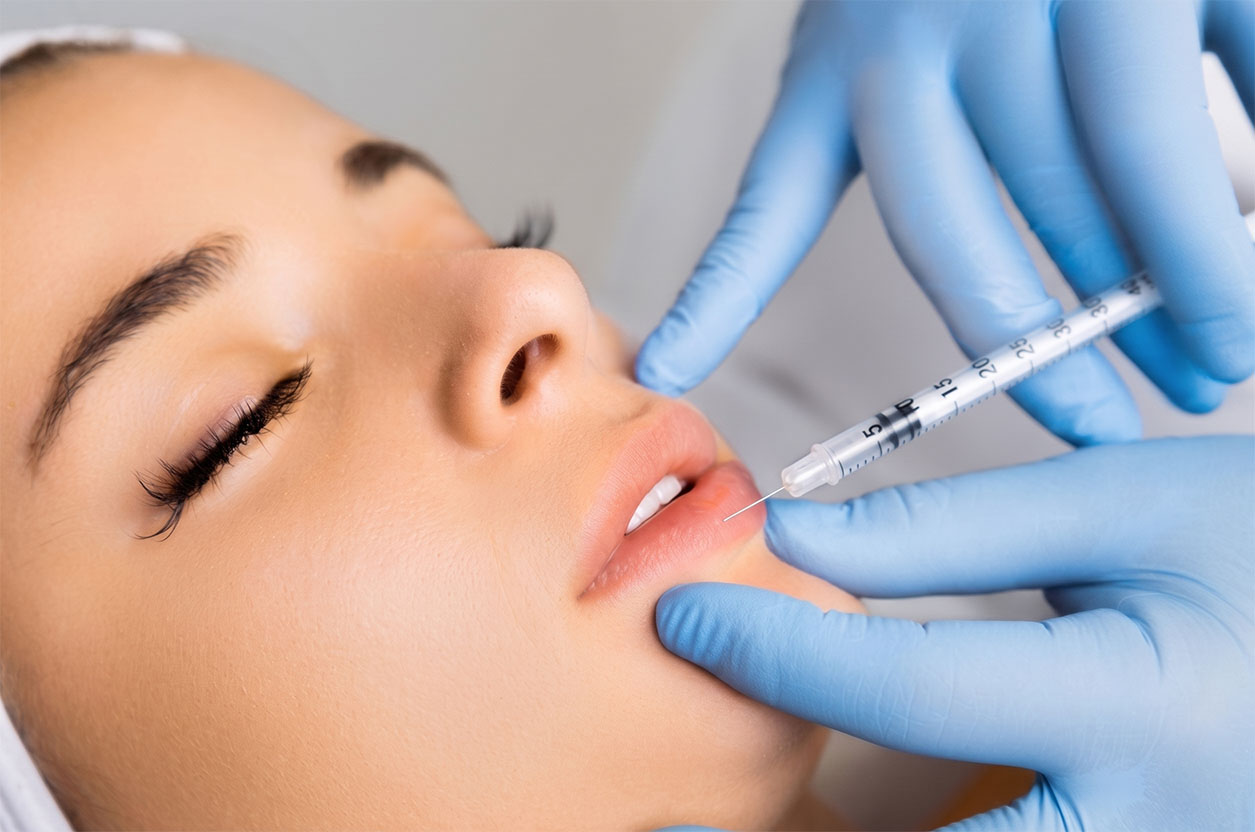
Annex XVI of the MDR defines six product groups that are covered by the regulation despite not having a medical purpose: Contact lenses without vision correction (including colored lenses), cosmetic implants for anatomical modification, dermal fillers and substances for injection or insertion into the skin for volumizing or contouring, devices for liposuction, lipolysis and lipoplasty, laser and IPL devices for skin treatment, and devices for skin ablation by physical methods.
We assess whether your product falls within the scope of the MDR and carry out the risk classification in accordance with Annex VIII. In doing so, we also take into account the Implementing Regulation (EU) 2022/2347, which contains clarifications on the classification of certain active Annex XVI products. Correct classification is crucial as it determines the required conformity assessment procedure and the involvement of notified bodies. We make sure that you take the right regulatory path from the start.
CE marking
& Notified Body
CE marking is mandatory for Annex XVI products. We prepare your company for the conformity assessment procedure and support you in your cooperation with notified bodies. We coordinate the submission of all necessary documents, prepare audits and support you in answering questions from the notified body.
Obtaining and maintaining CE marking requires not only initially complete documentation, but also continuous compliance processes. We help you to establish these processes: from managing product changes and updating technical documentation to preparing for surveillance audits. Our expertise is based on practical experience with various Notified Bodies and their specific requirements.
Quality management
& risk management
A quality management system certified in accordance with EN ISO 13485 is a basic requirement for MDR compliance. We support you in setting up a new QMS or further developing existing systems to meet the specific requirements of the MDR. In doing so, we implement structured risk management processes in accordance with ISO 14971, which are central to the safety of Annex XVI products.
In addition, we identify relevant common specifications as defined in the Implementing Regulation (EU) 2022/2346 for all Annex XVI product groups. These define product-specific requirements for risk management, safety information, labeling and instructions for use. We ensure that your systems and processes comply with these specifications and prepare you optimally for external audits.

Technical documentation
& clinical evaluation
The technical documentation for Annex XVI products must meet all the requirements of the MDR. We create and maintain complete technical files for you, which include the product description, design and manufacturing information, labels and instructions for use, risk analysis and assessment as well as the clinical evaluation. Special feature for Annex XVI products: According to Article 61(9) MDR, only safety and performance must be demonstrated instead of clinical benefit.
We develop a clinical evaluation strategy for you that fulfills these requirements without conducting unnecessary clinical trials. We use literature data, equivalence-based evidence or other suitable methods. At the same time, we plan post-market surveillance and prepare the necessary Periodic Safety Update Reports (PSUR). The complete documentation and regular updating of these documents is crucial for maintaining the CE marking.
Post-Market-Surveillance
& Vigilance
After the market launch, the continuous monitoring phase begins. We design and implement comprehensive PMS strategies for you that enable systematic data collection on product safety and performance. This includes complaint management processes, the recording and evaluation of adverse events and structured vigilance processes for reporting serious incidents to the relevant authorities.
We establish trend analysis systems for you, prepare PSUR reports and support you with registration in EUDAMED, the European database for medical devices. Through proactive post-market surveillance, you not only document the ongoing safety of your products, but also gain valuable insights for product optimization and the avoidance of safety risks.
With us, you gain a partner who translates regulatory requirements into clear, actionable steps and relieves your internal resources in a targeted manner. Instead of getting lost in the complexity of EU cosmetics legislation and MDR, you will receive structured support that gives you security and accelerates your market launch.
Cosmetics compliance and beauty medicine raise many questions. We have answered the most common ones for you – from the correct product classification to the CPSR and the requirements of the MDR for Annex XVI products. Your question is not listed? Please feel free to contact us.